
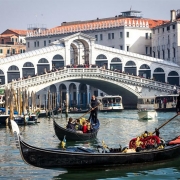
 © LunarSeaArt | Pixabay
How Italians Pioneered Trade and Interaction Between Europe and Asia
Marco Polo’s name is synonymous with the Silk Road. The story of his travels inspired many European explorers and wealth seekers to venture into the Far East.
Italy’s connection to the Silk Road extends far back into antiquity. It’s most renowned ties with the Far East, particularly China dates back to the days of Marco Polo.
In this Silk Road conversation, Consul General of Italy in Vancouver, Massimiliano Iacchini highlights Italy’s strong connection to the Silk Road, past and present.
Interview with Italian Consul General Massimiliano Iacchini on Italy’s connection to the Silk Road
(TRANSCRIPT OF INTERVIEW)
The transcript of the interview has been edited for brevity and clarity.
SILK ROAD TODAY: Thank you very much Consul General Iacchini for allowing me to interview you regarding Italy’s connection to the Silk Road. Italy of course, we know it’s a big part of the Silk Road.
MASSIMILIANO IACCHINI: Yeah, historically at the present day as well I would say. Thank you very much for this opportunity from Silk Road Today. As you mentioned of course, one of the most important characters of the connection between Europe and the Far East, China was Marco Polo.
He himself was a Venetian and he set off on his famous expedition to the East in 1271 and he returned from China to Europe in 1295.
Think about it, a travel that lasted 24 years. And of course when he came back, he came back with a lot of stories about Eastern cultures, people and traditions that were considered unbelievable at the time – because nobody knew in Europe what was the Far East about, what was China about.
So his journey demonstrated the possibilities of travelling to the East, and of course he not only created a Western fascination for the East, but also he succeeded in putting Central Asia, India and China on the western medieval map, so to encourage further trade and communication, and interaction in this direction.
So let’s say Marco Polo was the front runners of this adventure, but there were other Italian characters that did a lot for Europe and for Italy to be more aware about the Far East.
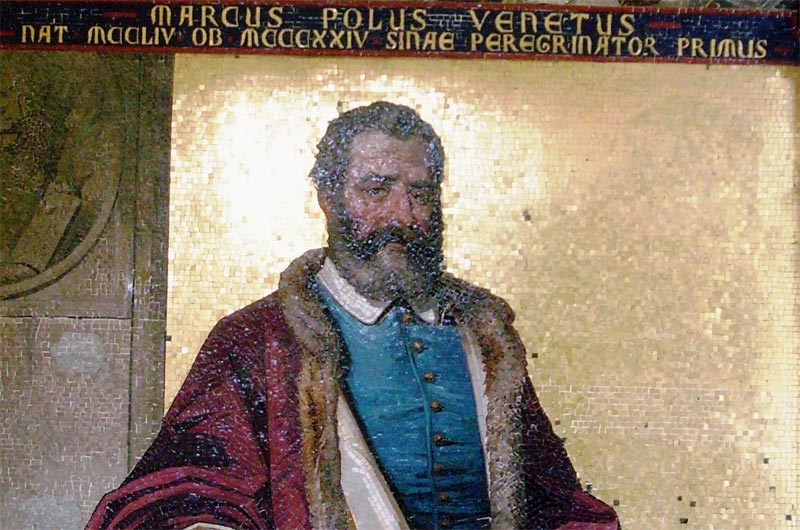
Marco Polo is the intrepid Venetian merchant and explorer who embarked on an epic odyssey that took him from his Venetian home through forbidden territories to the royal court of the Mongol emperor Kublai Khan.
Francesco Balducci Pegolotti – Guru of Silk Road Marketing
As you mentioned before, Francesco Balducci Pegolotti was a very…another very important character in this picture. One of the earliest surviving European writings on the direct contact between the Mediterranean Europe and East Asia was given by him, by Francesco Balducci Pegolotti – and through his notes on trade practices.
So at the time he wrote this kind of booklet in Italian was called la pratica della mercatura which means in English “practice of marketing”. Pegolotti was originally from Florence. He was employed by the first great banking house in Western Europe called Bardi…B-a-r-d-i. This firm has interest all over Europe, from England to the nearest base.
La pratica della mercatura – an internal memo or guide to describe the trade route and profit that could be made by merchants from Europe to Central Asia and to the Far East.
And in Pegolotti notes in this booklet which was written in the 14th century, it was very important, because it served as an internal memo or guide to describe the trade route and profit that could be made by merchants from Europe to Central Asia and to the Far East.
So this information that he gathered probably through also some journey that he made during the period of the so-called Pax Mongolica, when there was no war at the time…it was until the Central Asia region but there is no certainty that he travelled until further east from the Black Sea to China.
So most of the commentators at the time, they say that Pegolotti himself had never travelled there but he relied on the reports of several merchants who had used this road, and he also detailed other important ways of communication, such as the one from Tabrizi to Persia, and from Trebizond to Tabrizi, so even internally.
And these kinds of words were very important at the time because they were giving the picture of the potential in terms of communication relations and trade. This whole continent that at the time was really unknown. So this is for our side, for our country, the main heroes, let’s say or characters that developed this interest for the Far East.
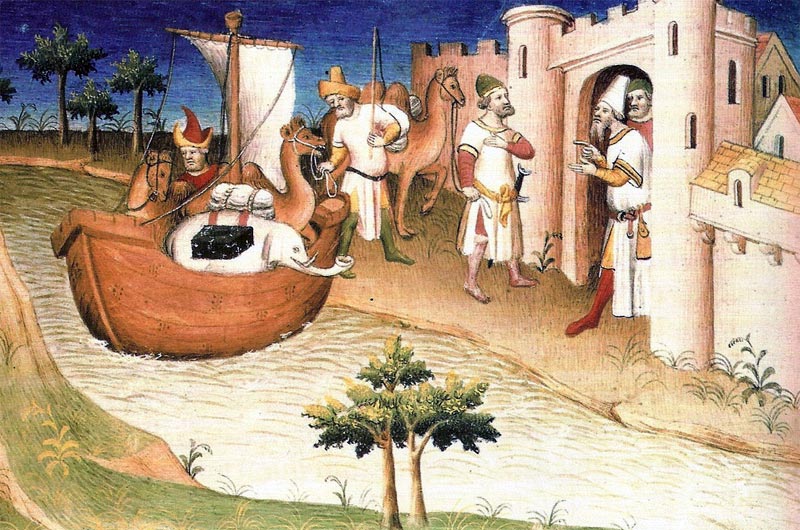
Marco Polo’s travels are documented in the book, “The Travels of Marco Polo” (“Il milione”).
SILK ROAD TODAY: All the pioneers that we talked about actually pioneered the early European pioneers that actually not only started trade towards the Far East but also trade within the Persian region.
IACCHINI: Yes, yes, exactly. At the time it was done piece by piece, and of course whenever the trade was established and reached a certain volume, with one reason they were going eastward, and at the time, the approach was of exploring, of knowing. And I think that in this period the Republic of Venice and also Florence were instrumental in pushing these pioneers go further east.
SILK ROAD TODAY: So Italians, it’s in your heritage that you’re adventurous traders.
IACCHINI: Thank you. Venice was a very important port as well…many interactions with Persia…it was the main port in the Mediterranean you have to bear in mind at the time. So it was like a cross-cultural and international hub, if you think about Vancouver nowadays, there’s connecting, for example, North America and Asian continent through the Pacific Ocean.
Of course at the time the distances were much more difficult, but in any way it was a centre where gathering, doing business, exchanging information and cultural behaviours, and knowing the countries and the communities from very far away.
Italian Silk Industry
SILK ROAD TODAY: Who actually started the silk industry in Italy, was it the merchants that brought the silk back from Venice and then started the industry?
IACCHINI: Well the silk industry had a very rapid and swift development in Europe at the beginning of the 12th century. And at that time Italy soon became one of the most important centres for manufacturing silk, above all in Genoa, on the western coast of Italy’s northern side, next to France. Venice of course and Florence were the main production areas.
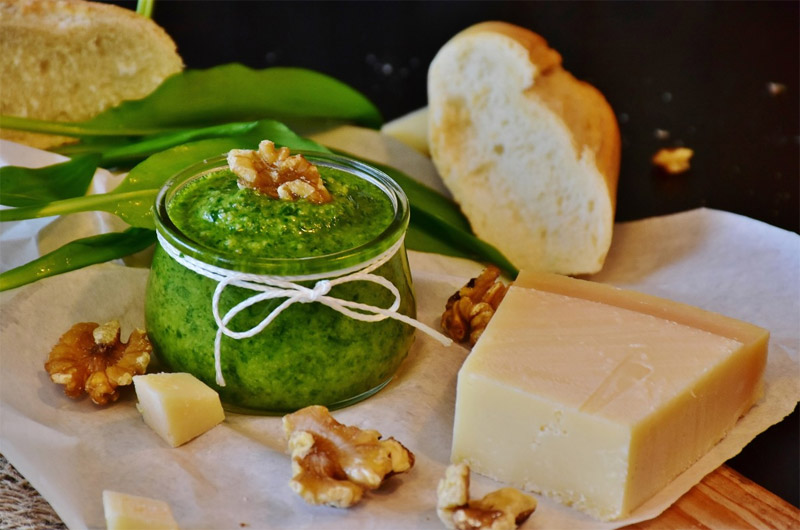
You can’t go wrong eating Italian food. It’s a cuisine that appeals to virtually every palate.
SILK ROAD TODAY: So certainly it sounds like the Italian Silk Road has evolved from past, from days of Marco Polo right up to today, we can still see that connection there, it’s still evolving, with the Made in Italy brand, we see a lot of your food, your culture, particularly as you said, the creative industry with the furniture, the fashion and so forth.
IACCHINI: And of course we believe that such a connection between the western part of Europe and the Far East is still nowadays very important because it’s multi-facet.
Once upon a time in the past it was very difficult to connect people, long travels, as I mentioned before Marco Polo stayed in China for 24 years. Can you imagine, it was not… it was a portion of his life, not only travel.
But nowadays everything is easier, so connectivity has to be used for the best interest of our people and the people living in the central part of Asia and the Far East.
So connectivity should be addressed something that it’s not only economic, financial, and legal integration, but as it was in the past, it was a conveyor belt for… as well as for art, for ideas, for inventions and as well for goods and services and trade and the growing economy from the two jurisdictions.
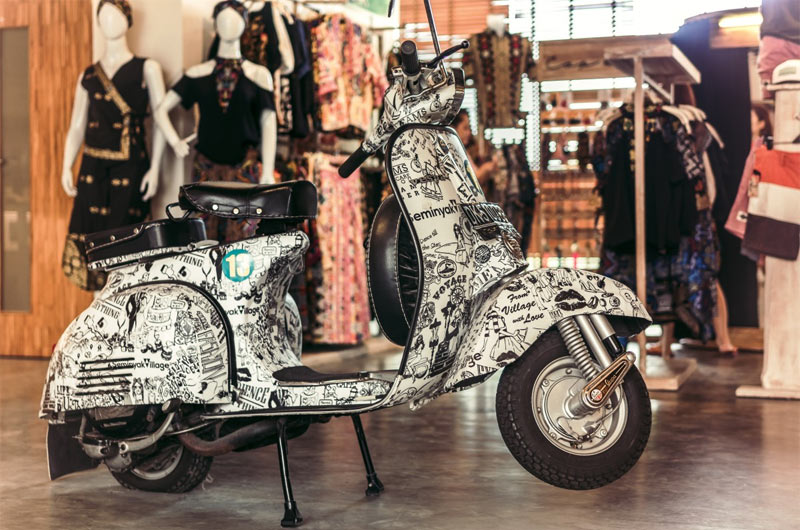
Fashion has always been integral to the Italian culture and society. The birth of Italian fashion go way back to 14th-Century Florence. Another iconic product of Italy is the Vespa (wasp in Italian). It was named after an insect because the early prototypes sounded like a buzzing insect.
So goods were travelling in both directions and with them they move ideas, science and other idea, other sectors of the culture activity that are crucial for the birth of the modern world as we know it today.
SILK ROAD TODAY: Well thank you very much Consul General Iacchini for giving us a perspective on the Italian connection to the Silk Road, and I’m very confident that Italy will continue to expand and branch out to various markets in the Far East and likewise as well.
IACCHINI: Thank you very much.
 ©Johan Berge/Visitnorway.com/Museum of Cultural History, University of Oslo